
Board
Group News
[Waste360 Interview Article] Scientists Turn Mixed Plastic Waste into Clean Hydrogen
- 작성자 : 김우재교수님연구실 관리자
Scientists Turn Mixed Plastic Waste into Clean Hydrogen
Mixed plastic waste is nearly impossible to recycle, with billions of tons choking landfills and incinerators worldwide. Now scientists in California and South Korea have developed a unique, experimental method to manage this problematic stream. It’s designed to deliver another advantage: converting the trash into clean hydrogen while trapping carbon before it’s released to the air.

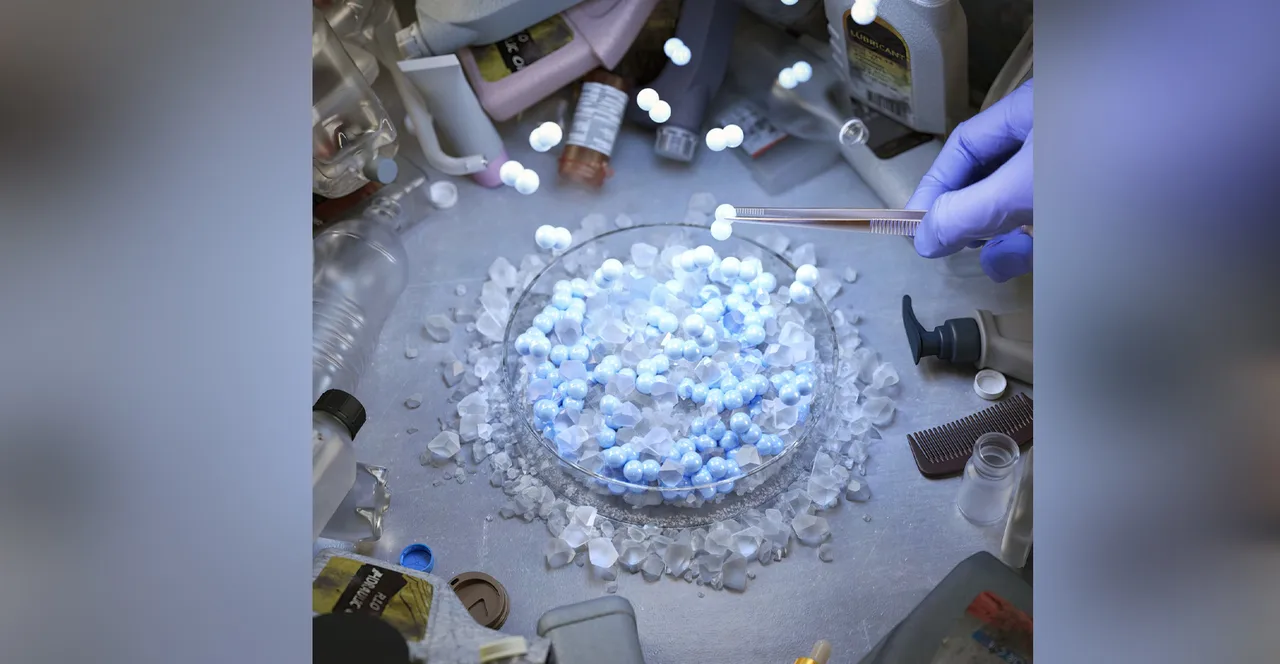
Mixed plastic waste is nearly impossible to recycle, with billions of tons choking landfills and incinerators worldwide. Now scientists in California and South Korea have developed a unique, experimental method to manage this problematic stream. It’s designed to deliver another advantage: converting the trash into clean hydrogen while trapping carbon before it’s released to the air.
Study co-author Woo-Jae Kim, a professor at Ewha Womans University, Korea, believes the thermal technology could achieve a $4-per-kilogram (kg) hydrogen cost. This would put it in line with North American subsidized rates for green hydrogen (produced via water electrolysis), which costs $3.50 to $6.00 per kg.
According to Kim, the competitive edge comes down to a few efficiencies. The process uses half the operating temperature of conventional gasification, requiring less energy. And it’s a fairly simple, one-step method. But the true differentiator is the use of sodium hydroxide (NaOH) as a catalyst—this chemical compound rapidly breaks down plastics, requiring almost no sorting, while boosting hydrogen yield.
“But now the problem is, what do we with the carbon, which makes carbon dioxide (CO2)—it’s a harmful greenhouse gas,” he says.
In answer, the team put the plastic-busting NaOH to work on a second task: capturing the CO2 released during the reaction and turning it into stable, solid sodium carbonate.

At the end of the process, all that’s left is two outputs: the sodium carbonate, which has some industrial applications, and high-purity hydrogen, potentially used for clean fuel, power, or to make chemicals.
“The key advantage is that we are not simply converting plastic into products—we are trying to produce hydrogen while keeping the carbon out of the atmosphere,” says Alissa Park, study co-author and a chemical and biomolecular engineering professor at UCLA Samueli School of Engineering.
“If the solid carbonate remains securely stored or managed, this could give waste-derived hydrogen a much lower carbon footprint than conventional combustion-based routes.
“The ultimate benefit should, of course, be confirmed by a full life-cycle analysis, but the fundamental idea is simple: recover the hydrogen and sequester the carbon,” Park says.
Keith D. Patch, an independent consultant specializing in hydrogen, confers that a robust life-cycle evaluation assessing environmental impact of hydrogen production, use, and disposal will be important. He points, for instance, to a reference in the UCLA/Ewha U study to calcium carbonate as a potential application. It’s widely used in cement.
This presents a challenge for carbon reduction goals, Patch explains, because when kilns turn calcium carbonate into quicklime, the stored CO2 is released, while burning kiln fuel also adds more emissions.
In the U.S., clean hydrogen producers can emit no more than 4 kg of CO2 for every 1 kg of hydrogen produced. This new process hits that 4 kg limit while yielding hydrogen with over 90% purity. For comparison, green hydrogen reaches 99.5% to 99.9% purity.
Kim and Park’s early steps took them in a slightly different direction, though ultimately laid the groundwork for how they would branch out. Their current process was adapted from a method they developed years ago to convert seaweed into hydrogen gas.
The colleagues began wondering if it would work with plastic—seaweed can be transformed into biodegradable alternatives that mimic polymers’ properties.
Preliminary work suggests their adapted method effectively handles polyethylene (PE), polypropylene (PP), polyethylene terephthalate (PET), polystyrene (PS), bioplastics, and food-contaminated plastics—as well as paper packaging and biomass beyond seaweed.
In the U.S., the need is clear, Park says.
EPA data show that only about 8.7% of plastics are recycled. The agency estimates that modernizing collection and processing infrastructure to boost this rate will cost between $36 and $43 billion.
Park believes mixed plastics-to-hydrogen could offset some of these infrastructure demands.
“If [the technology] scales, facilities would no longer need to perfectly separate low-value waste into PET, PE, PP, and other individual polymers before treatment. Metals, glass, and hazardous contaminants would have to be removed, but the plastic-to-plastic sorting burden could be greatly reduced,” she says.
For consumers, that could mean simpler recycling practices; for municipalities, lower sorting complexity and a productive outlet for plastics that are currently landfilled or burned. Importantly, this would complement—not replace—mechanical recycling for clean, high-value plastics, Park surmises.
While UCLA and Ewha Womans University successfully demonstrated a process that bypasses the need for pretreating or sorting plastics, Patch remains skeptical about the feasibility of the entire emerging plastic-to-hydrogen sector.
Drawing on his background in process engineering and product development, he says, “Due to the differences in plastics' properties, and each material's required pretreatment prior to conversion, plastic-to-hydrogen is likely to remain a niche application. It will likely be economically viable only where sufficiently large, consistent, well-characterized waste streams can justify the added sorting, pretreatment, and processing costs,” he says.
Advancing affordable clean hydrogen has proven difficult across all technologies.
Today, natural gas accounts for about 50% of global hydrogen production, primarily through steam methane reforming, which generates high CO2 emissions.
While green hydrogen is cleaner, its adoption stalls against high production costs, limited infrastructure, and regulatory red tape. So, the race is ongoing to find cheaper alternatives or smarter production methods for industrial decarbonization.
Though a massive amount of work remains. Right now, the world captures only 0.1% of CO2. Global emissions continue to climb, driven largely by fossil fuel combustion. Emissions rose 1% in 2022 and hit record highs in 2023. This scenario is further fueling interest in overcoming the barriers holding back hydrogen energy.
A select handful, like Kim and Park, are targeting plastic waste as feedstock. National Energy Technology Laboratory researchers are combining plastic waste with coal and biomass in a gasification process to produce hydrogen-rich syngas.
In England, Cambridge University researchers are deploying a solar-powered reactor to convert plastic trash into hydrogen fuel. And in Houston, a team out of Rice University pioneered its own unique technique with a similar idea in mind.
From their own lab, Kim and Park are working to advance to the next stage. Their most immediate hurdle is figuring out how to run an uninterrupted production workflow.
“Everything should be continuous. It’s what makes this process more scalable. But our reagents are solid, and solids are difficult to process nonstop. That’s what I’m working on now – running reactions and generating hydrogen continuously, so we can ramp up,” Kim says.